1
Intelligence you cannot Google
Inside the closed Chatham House roundtable — no recording, no attribution, no vendors — hear what your peers are actually doing about OJK's demands and real assessments.
Organised by ACCELETECH • Asia's revenue growth engine for global cybersecurity vendors
Cyber defense and resilience for Banks, Fintechs, Digital Payments and Insurance of Indonesia — one room, one mandate, no noise.
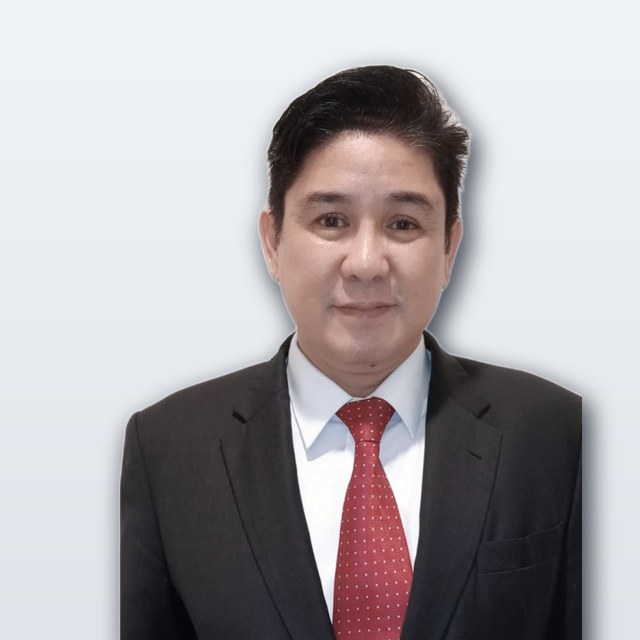
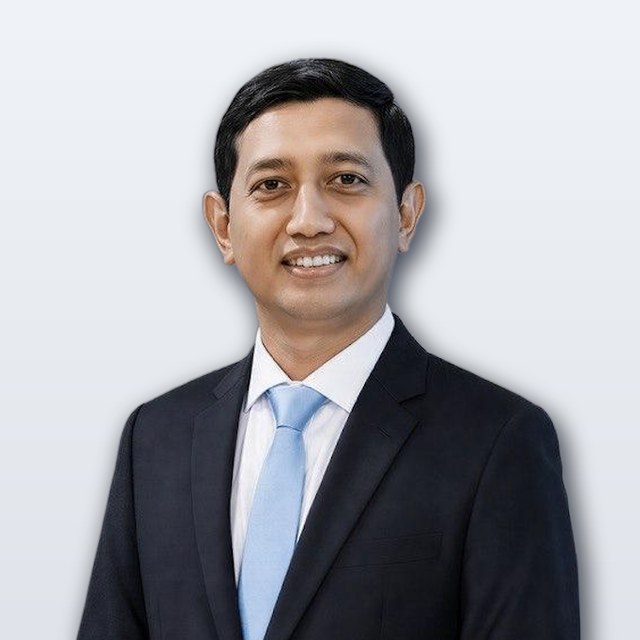
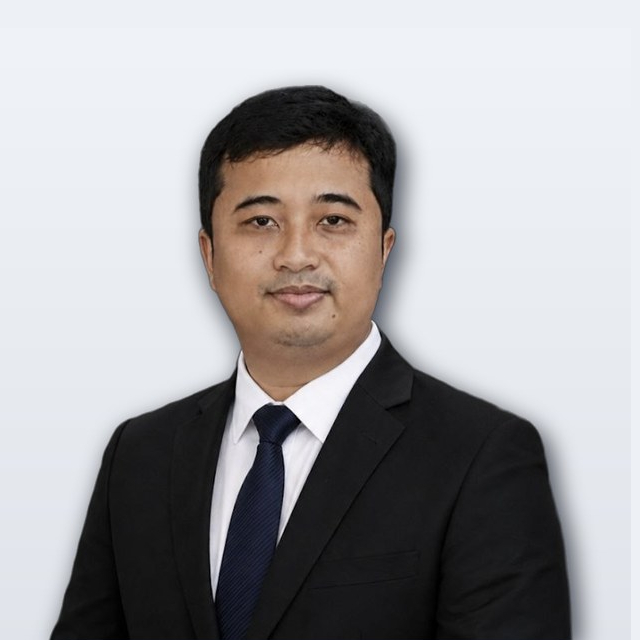




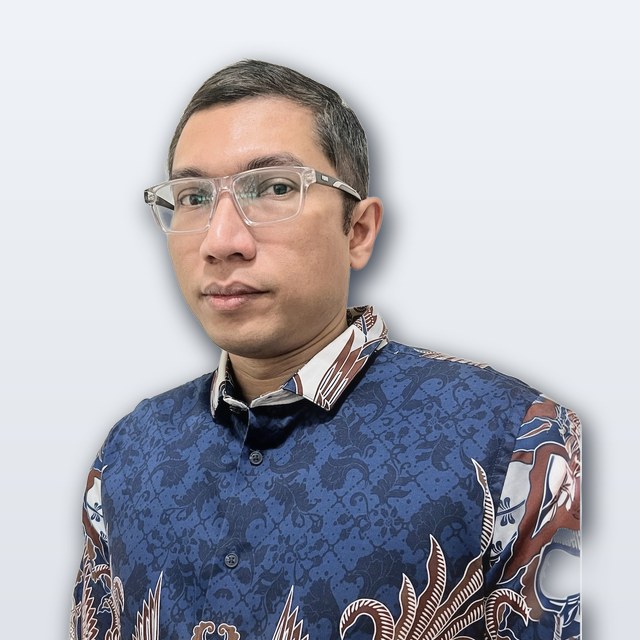







the Fin.SecurT Indonesia 2026 agenda delivers high-value executive conversations, exclusive research insights, and practical security strategies. Every session is focused on helping BFSI leaders reduce cyber risk, improve resilience, and stay ahead of an evolving threat landscape…write this first and then put the agenda
VIP lounge · meet the technology partners · business matching · partner booths
Brijesh "Ben" Mishraa — Founder, Fin.SecurT
Director — OJK (Otoritas Jasa Keuangan)
Future regulation · digital operational resilience · third-party risk · AI governance · BFSI compliance expectations
Senior Official — BSSN / Bank Indonesia
AI-driven threats reshaping BFSI defence · resilience across banks, fintechs, payments & insurance · innovation, trust & compliance in balance
Analyst keynote · key threats, actors & sector-specific attack trends · live maturity-benchmarking poll opens
Qualys
Connect with technology partners · business matching
Securden
Invited — CISO / Head of Information Security, leading Indonesian bank or insurer
Peer proof, not a pitch — a breach response, a POJK audit, or a digital-bank security build, told first-hand
Cymmetri
POJK expectations & BSSN guidance · audit readiness, third-party & cross-border data obligations · turning compliance into measurable trust
Explore partner booths · connect with peers
Maturity benchmarking across banking, fintech, payments & insurance — where the sector leads, and where the critical gaps remain
SecHard
The room's own maturity data, revealed live against the Financial Cyber Index categories
Energy Logserver
Connect with partners · explore technology
Forestall
Threatcop
Board accountability & operational resilience as a boardroom mandate · third-party, supply-chain & digital-banking exposure · what "recover in hours, not days" truly demands
Recognising 7–10 of Indonesia's leading BFSI CISOs and security teams
Ben Mishraa — Founder, Fin.SecurT
Invitation-only — with CISOs, CIOs, Heads of Information Security, regulators & sponsors
Strategic Technology Partners Global cybersecurity leaders collaborating to strengthen cyber resilience, regulatory compliance, and digital trust across Indonesia's BFSI sector.












Every Fin.SecurT summit is built on independent research. Our exclusive intelligence reports provide cybersecurity leaders with data-driven insights into emerging threats, regulatory priorities, and cyber resilience across Indonesia's financial sector. Download Our 2026 Research Reports .Indonesia Financial Cyber Index 2026 .Indonesia BFSI Cyber Threat Landscape 2026
Attackers allocate to value: direct monetisation, KYC data density, regulatory clocks that strengthen extortion, and interconnection that propagates a single breach.
At USD 115 billion in forecast value across 14.78 million merchants, payment fraud stops being an operational line item and becomes macro-economic.
Six stages, six interception points. The cost of defence rises steeply left to right.
The regulatory multiplier. Encryption starts three clocks at once: OJK notification, PDP Law breach liability, and soundness-rating review. Extortion pressure is now regulatory as much as operational — which is why the crisis plan is a control, not paperwork.
Fin.SecurT is Indonesia's first exclusively BFSI cybersecurity summit — invitation-only, 100 senior delegates, zero vendors on panels. No telco, no retail, no government IT. Just the banking, fintech, insurance and payments security leaders who face the same regulators, the same threats, and the same board every day. Here is why your peers are clearing their calendars.
Inside the closed Chatham House roundtable — no recording, no attribution, no vendors — hear what your peers are actually doing about OJK's demands and real assessments.
Anonymous peer benchmarking on OJK readiness, cyber resilience and incident response. Discover where you stand against your peers.
Understand what OJK, BSSN and Bank Indonesia are expecting before supervision begins and close the gaps early.
Gain recognition among Indonesia's BFSI security leaders through peer-reviewed awards and trusted industry acknowledgement.
Meet 100 senior BFSI security leaders facing the same regulators, threats and board expectations. Build relationships that matter before your next cyber incident.
The Indonesia BFSI Threat Intelligence Report — delegate-only, mapped to every OJK, BSSN, BI & PDP obligation.
A 12-month CISO action framework you can take to your board on Monday.
A clear sense of where you rank against your peers on regulatory readiness.
CPE credits toward your CISSP, CISA & CISM certifications.
Off-the-record peer intelligence from the closed roundtable.
A network of 100 BFSI peers — the contacts that matter in a crisis.
Senior BFSI delegates · capped
BFSI only · no mixed sectors
Vendors on panels
Closed CISO roundtable
Ten categories. An independent panel chaired by the Advisory Council. Submissions are judged on evidence of outcome — measured dwell time, tested recovery, programmes that survived supervisory examination.
Individual leadership across a measurable posture change.
Tested recovery under realistic conditions.
Measured reduction in loss, not deployment of a tool.
Phishing-resistant MFA and privilege elimination at scale.
Continuous assessment across a real supplier estate.
Dwell time evidenced against the national baseline.
Four further categories announced with the Advisory Council.
Fin.SecurT is not a booth. There is no exhibition hall, no badge scanning and no lead list of students. There is a curated room of BFSI decision-makers, and a limited number of ways to be in it.
Named alongside the chapter. Category exclusivity guaranteed in writing.
A speaking position on the main stage.
Presence and access without a stage position.
Investment levels are shared in the commercial prospectus. The Founding Partner position carries category exclusivity and is allocated in order of conversation.
Applications are reviewed against seniority, institution type and room composition. Some are declined — that is what makes the room worth sitting in.
Enter your details to receive the latest Fin.SecurT Intelligence Report.